How to Build Lasting Wealth Through Smart Investing Strategies
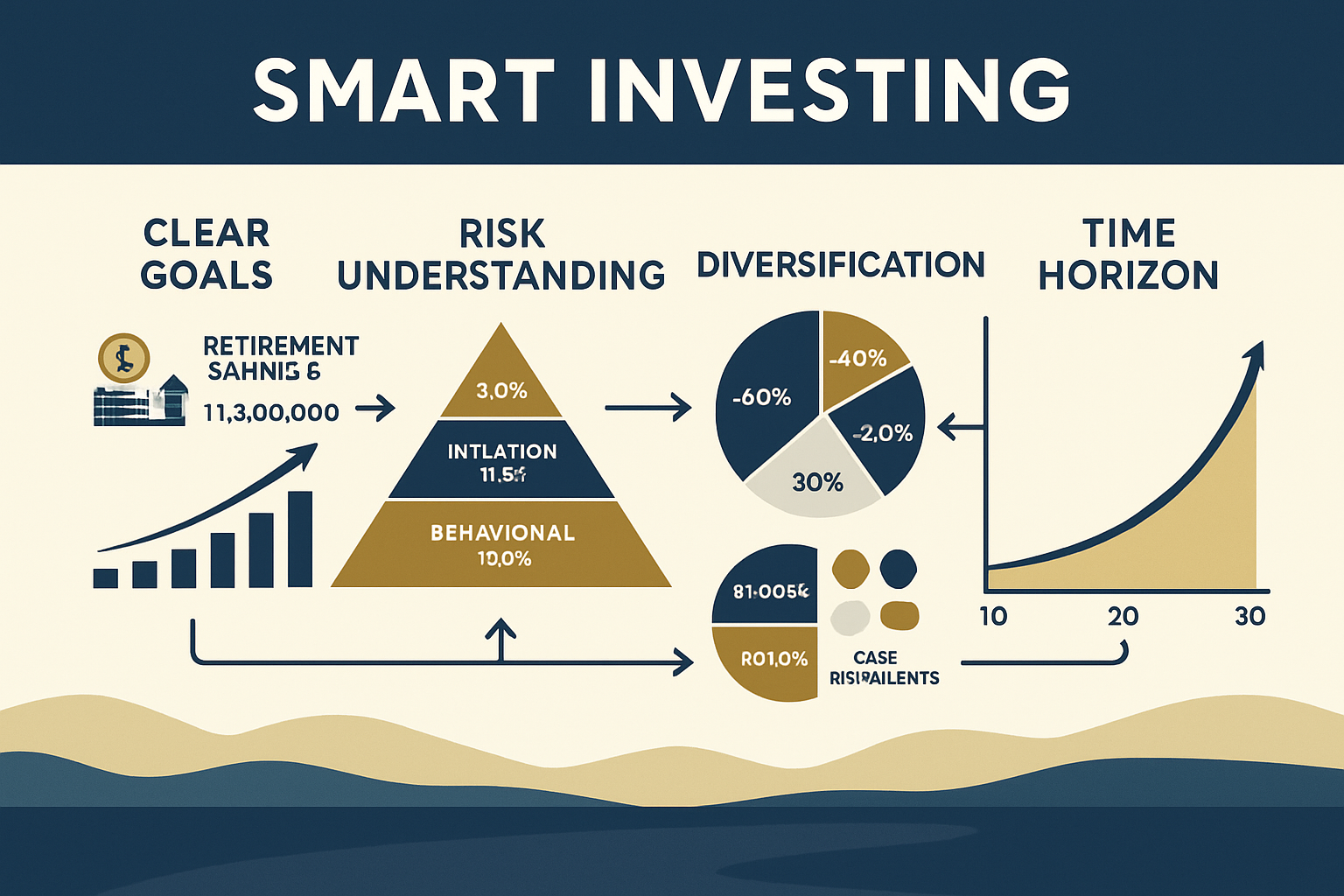
Let's be honest, friends: most of us were never actually taught how to handle money in school. We learned about the Pythagorean theorem and the causes of the French Revolution, but nobody sat us down to explain how compound interest actually works or how to build a portfolio that lets us sleep soundly at night while our money grows. For a long time, "investing" felt like something reserved for guys in expensive suits on Wall Street, but the truth is, building lasting wealth is less about secret insider tips and more about discipline, time, and a few smart strategies.
How to Build Lasting Wealth Through Smart Investing Strategies
If you're reading this, you're probably tired of just "getting by" or watching your savings account earn a pathetic 0.01% interest. You want your money to work for you, rather than you working for your money until the day you retire. That's a powerful shift in mindset. Wealth isn't necessarily about having a million dollars in the bank tomorrow; it's about creating a system that ensures you have financial freedom for the rest of your life.
In this guide, we're going to dive deep. We aren't just talking about "saving more"; we're talking about strategic asset allocation, the psychology of the market, and how to play the long game. Grab a coffee, get comfortable, and let's figure out how to make you wealthy.
The Foundation: Shifting Your Mindset from Consumer to Owner
Before we talk about stocks, bonds, or real estate, we have to talk about your brain. Most of us are conditioned to be consumers. We see a new gadget, a fancy car, or a trendy vacation, and we think, "How can I afford this?" That is the consumer mindset. The wealth-builder mindset asks, "How can I acquire an asset that pays for this luxury?"
When you buy a stock, you aren't just betting on a ticker symbol going up; you are buying a piece of a business. When you buy a rental property, you are owning a piece of the earth. The goal is to move your money from "depreciating assets" (things that lose value, like cars) to "appreciating assets" (things that grow in value or produce income). Once you realize that every dollar you invest is like a little employee working for you 24/7, the game changes completely.
The Magic of Compound Interest: Your Greatest Ally
We've all heard that compound interest is the "eighth wonder of the world," but let's actually look at why it's so powerful. Compounding happens when the earnings on your investments start earning their own earnings. It's a snowball effect. In the beginning, it feels slow. You might invest $1,000, make $70, and think, "Is this it?" But over decades, that curve turns vertical.
The Cost of Waiting
Here is a reality check, friends: the biggest enemy of wealth isn't a market crash; it's procrastination. If you start investing at 25, you have a massive advantage over someone starting at 35, even if the 35-year-old invests more money per month. Time is the multiplier. The longer your money stays in the market, the more the compounding does the heavy lifting for you. This is why "time in the market" always beats "timing the market."
Smart Investing Strategies for Long-Term Growth
Now that we have the mindset and the math down, let's get into the actual strategies. There is no one-size-fits-all approach because your risk tolerance is different from mine. However, there are some universal principles that the wealthiest people use.
1. Diversification: Don't Put All Your Eggs in One Basket
You've probably heard this a thousand times, but diversification is your insurance policy against catastrophe. If you put all your money into one "hot" tech stock and that company goes bankrupt, you're wiped out. But if you spread your investments across different sectors—tech, healthcare, energy, real estate, and international markets—a crash in one area won't ruin you.
The Index Fund Approach
For most of us, trying to pick the next Amazon or Tesla is like looking for a needle in a haystack. Instead, why not just buy the whole haystack? Index funds and ETFs (Exchange Traded Funds) allow you to buy a tiny slice of hundreds of companies at once. For example, an S&P 500 index fund gives you exposure to the 500 largest companies in the US. It's low-cost, low-stress, and historically very effective.
2. Dollar-Cost Averaging (DCA)
One of the scariest parts of investing is the fear of buying at the "top" right before a crash. Dollar-cost averaging solves this. Instead of trying to time the market, you invest a fixed amount of money at regular intervals (e.g., $500 every month), regardless of the price.
When prices are high, your $500 buys fewer shares. When prices crash, your $500 buys more shares. Over time, this lowers your average cost per share and removes the emotional stress of trying to guess what the market will do tomorrow. We call this "automating your wealth."
3. Asset Allocation Based on Life Stages
Your strategy should evolve as you age. When you're in your 20s or 30s, you have a high "risk capacity." If the market drops 20%, it doesn't matter because you don't need that money for another 30 years. You can afford to be aggressive with stocks and growth assets.
As you approach retirement, you shift toward "wealth preservation." This means moving some of your money into more stable assets like bonds, dividend-paying stocks, or real estate. The goal shifts from maximizing growth to ensuring a steady stream of income.
Deep Analysis: The Psychology of the Market
Here is the secret that the pros know: investing is 10% math and 90% temperament. The market is a pendulum that swings between two extremes: greed and fear. When things are going great, everyone feels like a genius and starts buying overpriced assets (greed). When things crash, everyone panics and sells their assets at the bottom (fear).
To build lasting wealth, you have to do the opposite. You have to be cautiously optimistic when others are panicked and skeptical when others are euphoric. The most successful investors are those who can stay rational when the news headlines are screaming that the world is ending. Remember, market crashes are actually "sales" for the long-term investor. They are opportunities to buy great assets at a discount.
Key Points for Your Wealth-Building Roadmap
If you're feeling overwhelmed, here is a simplified checklist to get you started on the right path:
- Build an Emergency Fund First: Before investing a single dime, save 3-6 months of living expenses in a high-yield savings account. You don't want to be forced to sell your investments during a market dip just because your car broke down.
- Kill High-Interest Debt: If you have credit card debt at 20% interest, paying that off is a guaranteed 20% return on your money. No investment can consistently beat that.
- Maximize Tax-Advantaged Accounts: Use your 401(k) (especially if there's a company match—that's free money!), IRAs, or equivalent tax-sheltered accounts in your country. Reducing your tax bill is one of the fastest ways to increase your net worth.
- Automate Everything: Set up an automatic transfer from your paycheck to your brokerage account. If you have to think about investing every month, you're more likely to skip it.
- Rebalance Periodically: Once a year, check your portfolio. If your stocks grew so much that they now make up 90% of your portfolio (when you wanted 70%), sell some and move them into other assets to maintain your risk level.
- Keep Learning: The world changes. New assets like REITs or sustainable energy funds emerge. Stay curious, but don't chase "get rich quick" schemes.
The Role of Real Estate in a Wealth Portfolio
While stocks are great, many wealthy people use real estate as a cornerstone of their strategy. Why? Because real estate offers something stocks often don't: leverage. You can put down 20% of your own money and use the bank's money for the other 80% to control a large asset.
Whether it's through physical rental properties or REITs (Real Estate Investment Trusts), real estate provides two paths to wealth: rental income (cash flow) and property appreciation (equity). When combined with a diversified stock portfolio, real estate creates a hedge against inflation, as rents and property values typically rise when prices in the general economy go up.
Kesimpulan tentang The Journey to Financial Freedom
Building lasting wealth isn't a sprint; it's a marathon. There will be years where your portfolio looks like it's shrinking, and there will be years where you feel like a financial wizard. The key is to stay the course. The "smart" part of smart investing isn't finding a magic stock; it's having a system that you can stick to for twenty years without panicking.
Friends, the best time to start investing was ten years ago. The second best time is today. Start small, stay consistent, and remember that the goal isn't just to have a big number in a bank account—it's to have the freedom to spend your time exactly how you want to. You've got this!
Frequently Asked Questions
Q1: How much money do I actually need to start investing?
A: You don't need thousands of dollars. Thanks to fractional shares and low-cost apps, you can start with as little as $5 or $10. The amount is less important than the habit. Starting with a small amount now teaches you the emotional discipline needed to handle larger sums later.
Q2: Should I pay off my mortgage or invest in the stock market?
A: This depends on the interest rate of your mortgage. If your mortgage rate is 3% and the stock market historically returns 7-10%, you are mathematically better off investing. However, the psychological peace of owning your home outright is a "return" that can't be measured in percentages. Many people choose a hybrid approach—investing while making small extra payments on the principal.
Q3: Is it too late to start if I'm in my 40s or 50s?
A: It's never too late, but your strategy must change. You have a shorter time horizon, so you can't be as aggressive as a 20-year-old. You'll need to increase your savings rate (invest more per month) and focus on a balanced portfolio that blends growth with income-generating assets like dividend stocks or bonds.
Q4: What happens if the market crashes right after I start?
A: Honestly? It's actually a great thing for a new investor. If you are using dollar-cost averaging, a crash allows you to buy more shares at a lower price. As long as you aren't investing money you need for next month's rent, a crash is just a discount on your future wealth. The market has recovered from every single crash in history; it eventually will again.

Post a Comment for "How to Build Lasting Wealth Through Smart Investing Strategies"
Post a Comment