Strategic Investing for Significant Gains: Proven Techniques to Grow Your Wealth
In today’s fast-paced financial world, the pursuit of significant gains through strategic investing has never been more critical. Whether you're a seasoned investor or just starting out, understanding how to build and manage a portfolio that consistently delivers strong returns is essential. With the right strategies, discipline, and knowledge, you can turn your investments into a powerful engine for wealth growth.
This article explores proven techniques for strategic investing, drawing from real-world data and modern insights to help you make informed decisions. We’ll look at time-tested methods like the Magic Formula and momentum investing, as well as broader strategies such as top-down and bottom-up approaches, passive index investing, and risk management. By the end, you’ll have a clear roadmap for growing your wealth with confidence.
The Power of Quantitative Strategies: Magic Formula and Momentum

One of the most effective investment strategies in recent years has been the Magic Formula, developed by Joel Greenblatt. This approach focuses on identifying high-quality companies that are undervalued. It uses two key metrics: return on invested capital (ROIC) and earnings yield. Companies with high ROIC are typically strong performers, while those with high earnings yield are considered undervalued. When combined, these metrics help investors find stocks that are both fundamentally sound and attractively priced.
A backtest of the Magic Formula across Europe from 1999 to 2011 showed impressive results. The best-ranked companies significantly outperformed the market, delivering returns of over 30% during that period. However, the strategy could be even more powerful when combined with momentum investing—a technique that looks at a stock’s recent price performance.
By selecting the top 20% of Magic Formula companies and then sorting them based on their six-month price momentum, investors could have achieved an eye-popping return of 783% over 12 years. This combination proved especially effective in the European market, where economic conditions were volatile but opportunities abounded for those who knew where to look.
Top-Down vs. Bottom-Up: Choosing the Right Approach
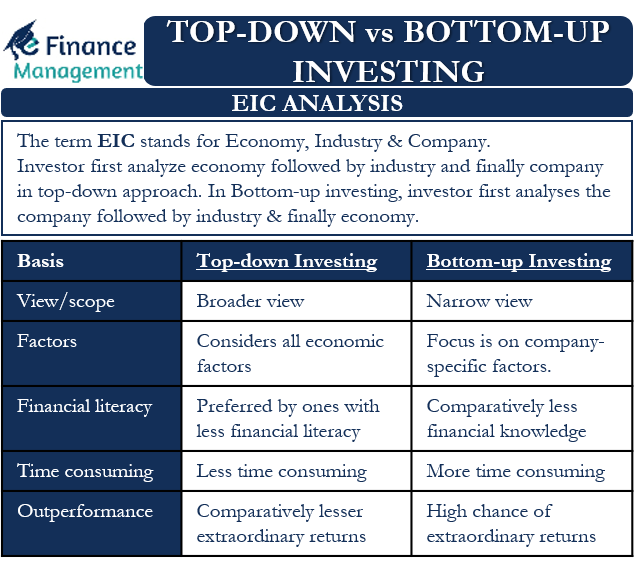
Investors often face a fundamental choice: should they take a top-down or bottom-up approach? Each has its own strengths and is suited to different types of investors.
The top-down strategy starts with a broad view of the economy. Investors analyze macroeconomic trends, such as interest rates, GDP growth, and inflation, to identify promising sectors. Once a sector is selected, they focus on individual companies within that space. This method is ideal for those who want to align their investments with broader economic cycles and are comfortable with a more strategic, long-term outlook.
On the other hand, the bottom-up approach focuses on the fundamentals of individual companies. Instead of worrying about macroeconomic trends, investors dive deep into financial statements, competitive advantages, and management quality. This method is particularly useful for finding undervalued stocks that may be overlooked by the market.
Both strategies have their place. For example, a top-down investor might choose to focus on the technology sector during a period of low interest rates, while a bottom-up investor might uncover a hidden gem in a less popular industry. Many successful investors use a blend of both, leveraging the strengths of each approach.
Passive Index Investing: Simplicity and Long-Term Growth

For investors seeking a hands-off approach, passive index investing offers a compelling option. Rather than trying to pick individual stocks, this strategy involves replicating the performance of a broad market index, such as the S&P 500. By investing in index funds, beginners gain exposure to a wide range of companies with minimal effort and lower fees.
One of the biggest advantages of passive investing is its simplicity. It eliminates the need for constant research and trading, making it ideal for those who prefer a more straightforward approach. Additionally, because index funds track the overall market, they tend to perform consistently over the long term, reducing the risk of underperformance.
However, passive investing isn’t without its drawbacks. While it offers steady growth, it doesn’t aim to outperform the market. That means investors won’t benefit from the high returns that some active strategies can generate. Still, for many, the trade-off between simplicity and performance is worth it.
Dividend-Focused Investing: Income and Growth
Another popular strategy is dividend-focused investing, which prioritizes stocks that pay regular dividends. These companies typically have strong cash flows and are often established, stable businesses. By reinvesting dividends, investors can accelerate the growth of their portfolios through compounding.
Dividend investing is particularly appealing to those seeking regular income, such as retirees or individuals looking for a steady cash flow. It also offers the potential for long-term growth, as many dividend-paying companies are leaders in their industries and are likely to continue growing over time.
That said, not all dividend stocks are created equal. Some may offer high yields but lack the underlying fundamentals to sustain them. It’s important to carefully evaluate a company’s financial health before investing.
Expanding Horizons: Global Diversification
Diversifying your portfolio across global markets can provide additional protection against regional economic downturns. By investing in international assets, you reduce the risk of being overly exposed to a single country or region.
Global diversification can be achieved through various means, including global mutual funds, foreign stocks, or even currency markets. For example, investing in EUR/USD currency pairs can offer exposure to the European and U.S. economies, providing a hedge against fluctuations in either market.
As of 2025, the global investment landscape continues to evolve, with emerging markets offering new opportunities and developed markets remaining stable. A well-diversified portfolio can help investors navigate these changes with greater confidence.
Risk Management: The Foundation of Successful Investing
No matter which strategy you choose, risk management is essential. One of the most common mistakes among beginner investors is overexposure to a single investment. To mitigate this, many professionals use position sizing—a technique that limits the percentage of your portfolio allocated to any one stock or asset class.
Effective risk management also involves setting clear stop-loss levels and regularly reviewing your portfolio. By staying disciplined and avoiding emotional decisions, you can protect your capital and increase the likelihood of long-term success.
Embracing Technology: Tools for Modern Investors
Modern technology has transformed the way we invest. Online platforms like MetaTrader 5 and Robinhood provide access to global markets, analytical tools, and educational resources—all at a fraction of the cost of traditional brokerage services. These platforms empower investors to make informed decisions quickly and efficiently.
However, while technology makes investing more accessible, it doesn’t replace the need for discipline and strategy. The best investors still rely on sound principles, regardless of the tools they use.
Conclusion: Building a Wealth-Generating Strategy
Strategic investing for significant gains is not about chasing quick wins—it's about building a disciplined, well-researched approach that stands the test of time. Whether you choose the Magic Formula, a top-down or bottom-up approach, or a mix of strategies, the key is consistency and adaptability.
By combining quantitative analysis, risk management, and a long-term perspective, you can create a portfolio that not only survives market volatility but thrives in it. Remember, the goal is not just to grow your money, but to do so in a way that aligns with your financial goals and risk tolerance.
Start small, stay informed, and keep refining your approach. With the right mindset and strategies, you can unlock the full potential of your investments and achieve lasting financial success.

Post a Comment for "Strategic Investing for Significant Gains: Proven Techniques to Grow Your Wealth"
Post a Comment